
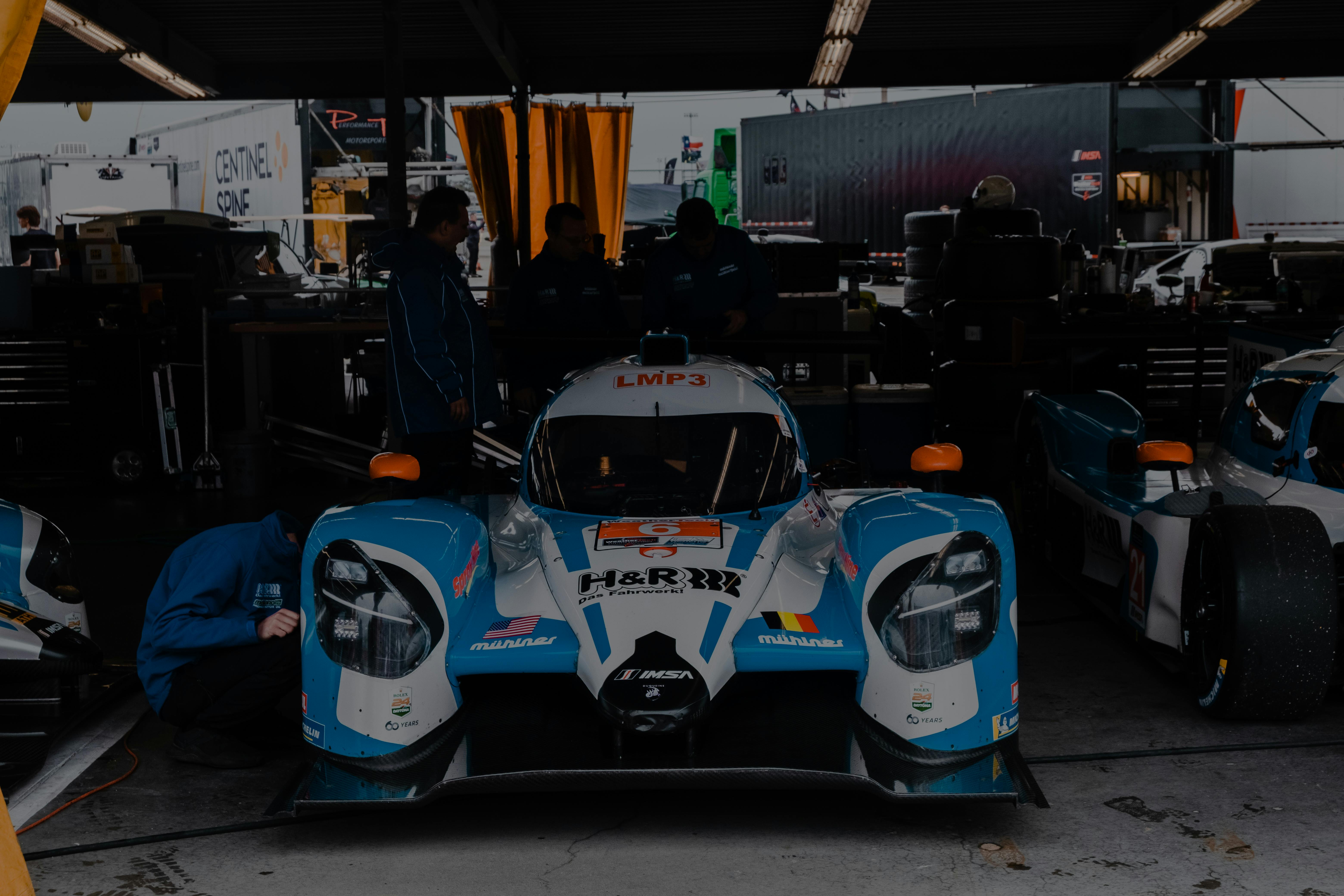
Races are often decided by decisions made on a pit wall rather than by overtaking on track. The reason is that a pit stop is a known, fixed cost weighed against an uncertain, growing one.
A stop costs a measurable amount of time
Entering the pit lane, observing the speed limit, stopping, and rejoining together consume a quantity of time that can be measured precisely at any given circuit.
That figure varies enormously between venues depending on pit lane length and layout, which is why strategy differs from one race to another far more than the cars do.
Because the cost is known in advance, the whole decision reduces to whether the car will gain more than that amount of time by fitting fresh tyres.
Tyre degradation is the variable being managed
A tyre loses performance as it wears and as its surface degrades, and the loss accumulates. Lap times drift upwards steadily rather than falling off a cliff.
Softer compounds start faster and degrade sooner; harder ones do the reverse. The choice between them is a choice about where in the race a car wants its pace.
Degradation depends on track temperature, surface abrasiveness and how hard the driver has been pushing, so it is estimated rather than known.
Track position complicates the arithmetic
A faster car stuck behind a slower one cannot use its advantage, so being ahead has value beyond raw pace, particularly at circuits where overtaking is difficult.
Stopping early gains fresh tyres but returns the car into traffic, where its new pace may be wasted. Stopping late keeps position but on worsening rubber.
Teams therefore model where a car will emerge after a stop, which requires predicting the positions and pace of every other car at that moment.
Undercut and overcut are the two attacking moves
The undercut means stopping before a rival and using the immediate pace advantage of fresh tyres to make up enough time to emerge ahead when they stop.
The overcut is the opposite: staying out while a rival stops, exploiting clear air to lap quickly, and emerging ahead after taking the stop later.
Which works depends on whether fresh tyres or clear track is worth more at that circuit, and the answer can change during the race as the surface evolves.
Why strategies diverge across the field
A car leading has different incentives from one running sixth, because the leader is protecting a position while the car behind is gambling to gain one.
Safety car periods rewrite everything, since the field bunches and a stop taken under those conditions costs far less time than one taken at racing speed.
Teams therefore prepare several plans in advance and choose between them as events unfold, which is why a strategy call can look inspired or inexplicable from outside.