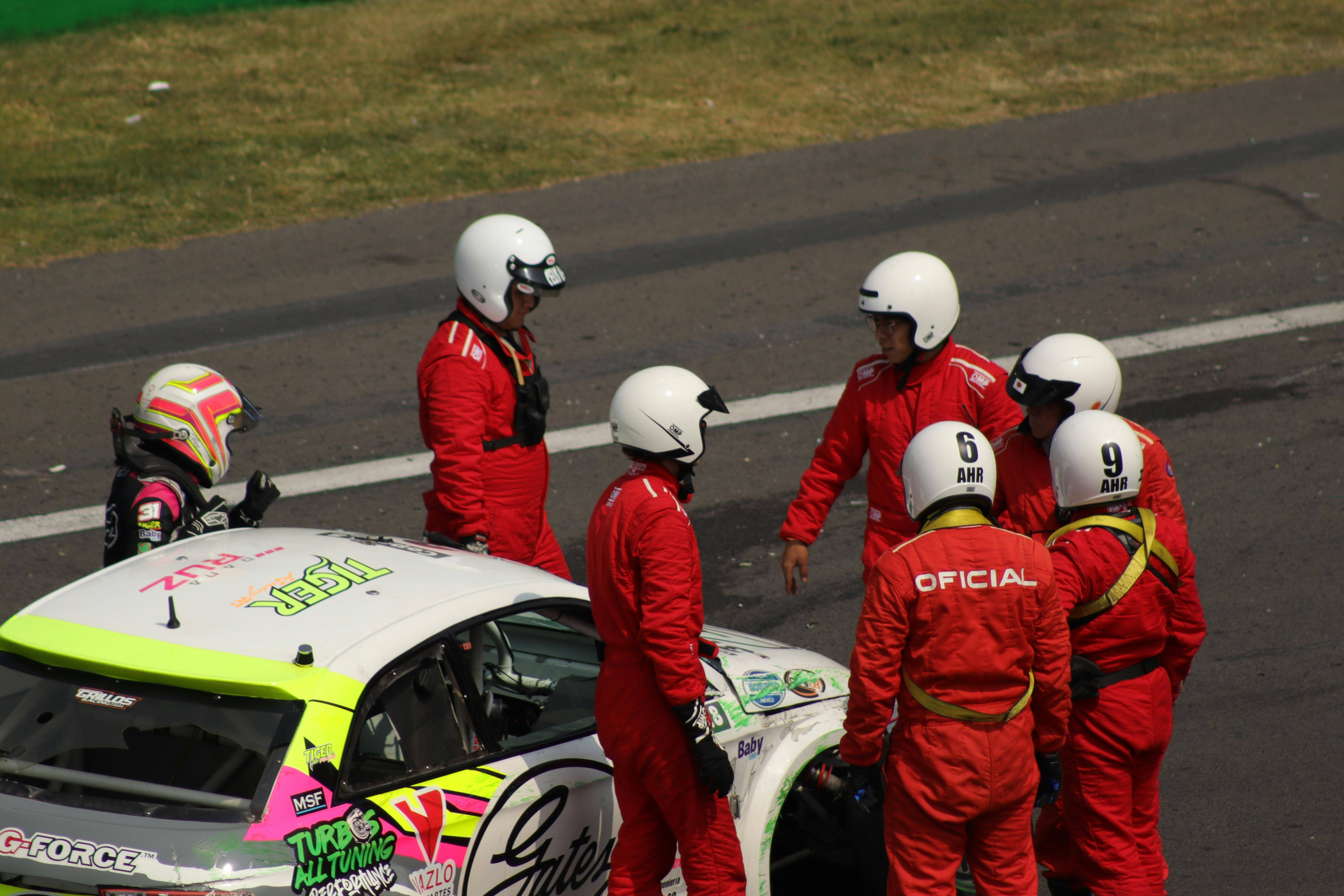
Every open lapping day begins with a technical inspection of the cars entered. The checklist is short and its logic is consistent: the inspection is looking for things that endanger other drivers.
Fluid containment is the first concern
Oil on a racing surface is the most dangerous failure a car can produce, because it affects every driver who follows and takes considerable time to clean up.
Inspectors check for leaks at the engine, transmission, differential and power steering, and they look at hose condition rather than only at whether the ground is wet.
Coolant overflow receives the same attention, since a bottle that vents onto the track under sustained heat behaves exactly like an oil spill on a corner exit.
Brakes are checked as a system
Pad thickness matters, but so does fluid condition, because repeated hard stops raise fluid temperature and moisture-contaminated fluid boils and produces a long pedal.
Inspectors look for cracked flexible lines and for rotor cracking, both of which fail suddenly rather than progressively and give the driver no warning.
Many organizations specify a minimum pad material remaining, since a street car's brakes wear far faster on track than the same pads would over months of commuting.
Loose items become projectiles
Anything unsecured in the cabin will move under cornering loads that street driving never produces. Floor mats can slide forward and interfere with the pedals.
Inspections require the interior emptied, including the trunk and door pockets, and the spare wheel is usually removed rather than left to shift around.
Battery hold-downs are checked for the same reason. A battery that breaks free can short across the chassis and start a fire.
Wheels, tires and steering get a hands-on check
Lug nuts are verified for torque, and inspectors physically shake each wheel to feel for bearing play or a loose tie rod end.
Tires are examined for damage and adequate tread, and inspectors note the age of the rubber because hardened old tires behave unpredictably when heated.
Excessive steering play or a leaking damper will fail the car, since both change how the vehicle responds at the limit rather than merely feeling worn.
What inspection deliberately does not judge
Technical inspection at a lapping day is not a performance rulebook. Modifications are generally accepted provided they are securely mounted and do not leak.
Helmet certification and seatbelt condition are checked, and convertibles usually face rollover protection requirements, but the emphasis stays on containment and attachment.
The inspection is a filter, not a guarantee. It removes the failures that endanger the group and leaves everything else to the driver's own judgment.