
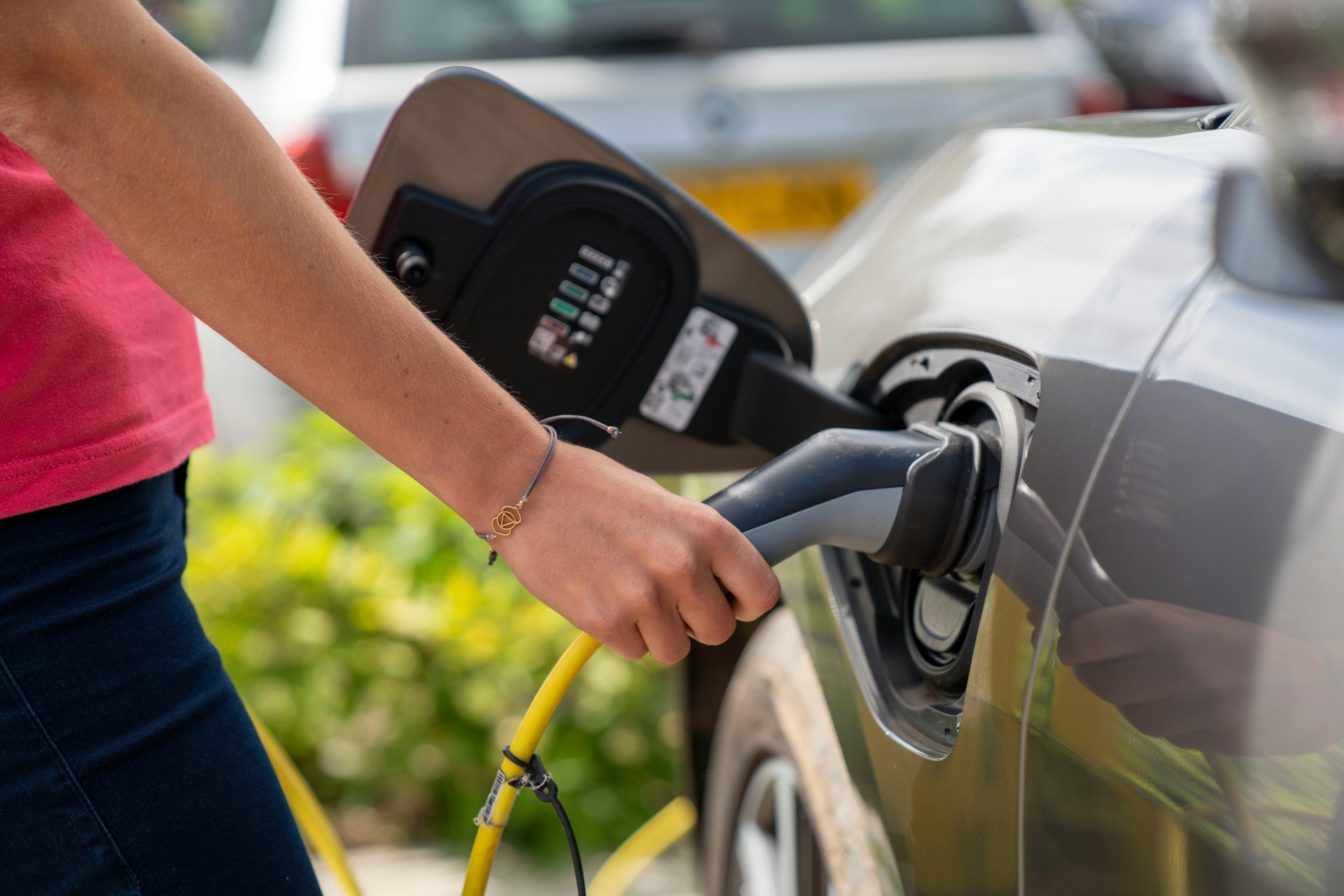
The year 2026 marks a pivotal moment for electric vehicles. Range anxiety and high upfront costs are officially relics of the past. Discover how cutting-edge battery technology, fierce competition, and smart manufacturing have converged to deliver a new generation of long-range EVs that are genuinely affordable. We compare the best budget-friendly electric cars, reveal hidden savings, and guide you to your next electric dream machine. Get ready to electrify your commute without breaking the bank!
Introduction to the Topic
For years, the electric vehicle dream felt just out of reach for many. Early adopters embraced the technology, but the average consumer often faced a daunting choice: pay a premium for substantial range, or settle for a more affordable EV with limited travel capabilities. Range anxiety was a real concern, and the sticker shock of a long-distance electric car was enough to send many back to the gasoline pump. But that era, dear readers, is officially over.
Welcome to 2026, the year of the truly affordable, long-range electric vehicle! MotorsCrazy.com is thrilled to announce that the EV market has matured, innovated, and democratized in ways previously only dreamed of. Thanks to relentless advancements in battery chemistry, streamlined manufacturing processes, and fierce competition among global automakers, you no longer need to compromise on range or empty your savings to join the electric revolution. The sweet spot – a brand-new EV offering 250+ miles of range for under $40,000 – is not just a fantasy; it's a vibrant reality, teeming with compelling options. This article will be your ultimate guide to navigating this exciting new landscape, helping you find the perfect blend of range, features, and price for your next vehicle purchase.
Backgrounds & Facts
The journey to affordable, long-range EVs has been a marathon, not a sprint. A decade ago, a 200-mile range EV was a luxury item, costing upwards of $70,000. Battery technology, while impressive, was expensive to produce and relatively heavy. Charging infrastructure was nascent, and public perception was often skeptical.
Fast forward to 2026, and the landscape is unrecognizable. Several critical factors have converged to create this seismic shift:
- Battery Breakthroughs: The cost per kilowatt-hour (kWh) of batteries has plummeted by over 80% in the last decade. Innovations in cell chemistry, such as improved lithium-ion compositions and the increasing viability of sodium-ion batteries for entry-level models, mean more energy can be stored in smaller, lighter, and crucially, cheaper packs. Manufacturing efficiencies, including giga-factories and advanced robotic assembly, have further driven down costs.
- Dedicated EV Platforms: Most major automakers have now transitioned from adapting ICE platforms to building EVs on purpose-built electric architectures. These platforms (like Hyundai-Kia's E-GMP, VW's MEB, or Stellantis' STLA Small) optimize space for batteries, motors, and charging components, leading to greater efficiency, better packaging, and reduced manufacturing complexity and cost.
- Economies of Scale: As EV production volumes surge globally, economies of scale are kicking in. Component suppliers are producing parts in greater quantities, leading to lower unit costs. This benefits consumers directly through more competitive pricing.
- Robust Charging Networks: The expansion of public charging infrastructure, particularly high-speed DC fast chargers, has significantly alleviated range anxiety. With thousands of new charging stations appearing annually across North America and Europe, long-distance travel in an EV is now as convenient, if not more so, than in a gasoline car.
- Government Incentives: While varying by region, government incentives (tax credits, rebates, purchase grants) continue to play a crucial role in making EVs more accessible. Many of these incentives are specifically designed to benefit buyers of more affordable models, further reducing the effective purchase price.
- Total Cost of Ownership (TCO): Beyond the sticker price, the TCO for EVs continues to impress. Lower fuel costs (especially when charging at home), reduced maintenance needs (fewer moving parts, no oil changes), and often lower insurance premiums contribute to substantial long-term savings, making the upfront investment even more appealing.
These combined forces have created a perfect storm for consumers, transforming the EV market from a niche luxury segment into a mainstream, accessible choice for millions of drivers.
Expert Opinion / Analysis
“The year 2026 will be remembered as the inflection point for mass EV adoption,” states Dr. Anya Sharma, lead automotive analyst at Electrify Global Insights. “For years, the industry chased luxury and performance, pushing the boundaries of what an EV could do. Now, the focus has shifted, and rightly so, to what an EV must do to win over the average household: deliver practical range at an unbeatable price point.”
Dr. Sharma emphasizes that this affordability isn't coming at the expense of quality or features. “Manufacturers are leveraging smart modular design, platform sharing, and even vertical integration of battery production to maintain profit margins while passing significant savings to the consumer. We're seeing premium features like advanced driver-assistance systems, large infotainment screens, and even vehicle-to-load (V2L) capabilities trickle down to vehicles in the sub-$40,000 category. This wasn't possible just a few years ago.”
The impact on the traditional internal combustion engine (ICE) market is profound. “As the cost of entry for a capable EV drops below that of a comparable gasoline-powered compact or mid-size car, the value proposition for ICE vehicles diminishes rapidly,” notes industry veteran Mark Jensen, CEO of AutoFuture Consulting. “Consumers are not just buying a car; they're investing in lower running costs, a quieter ride, and a cleaner future. Dealers who understand this shift and offer compelling EV financing and leasing options will be the ones who thrive in this new landscape.”
Experts also point to the strategic importance of this segment for global sustainability goals. “Making EVs accessible to a broader demographic is key to reducing carbon emissions on a large scale,” adds environmental policy expert, Professor Li Wei from the Institute for Sustainable Transport. “The 2026 lineup of affordable, long-range EVs is a testament to technological progress meeting environmental imperative. It's a win-win for consumers and the planet.”
💰 Best Options in Comparison (VERY IMPORTANT)
The market for affordable, long-range EVs is exploding in 2026, offering an unprecedented array of choices. We've hand-picked three standout models that perfectly encapsulate this new era, delivering impressive range, cutting-edge features, and prices that will make you rethink your next car purchase. Get ready to compare, contrast, and click your way to a fantastic deal!
1. Kia EV3 (2026 Model)
Kia has consistently impressed with its EV lineup, and the all-new 2026 EV3 is set to be a game-changer in the compact EV segment. Building on the stunning design language of its larger EV siblings, the EV3 offers a bold, futuristic aesthetic coupled with a surprisingly spacious and tech-laden interior. Expect a standard range nearing 300 miles on a single charge, powered by an efficient electric powertrain. Kia's commitment to value means you'll find premium features like V2L (Vehicle-to-Load) functionality, advanced safety suites, and a responsive infotainment system even in its entry-level trims. It's an ideal choice for urban dwellers and small families seeking style, substance, and range without the premium price tag. Look for competitive financing and lease deals directly from Kia dealerships.
2. Volkswagen ID.2all (2026 Production)
Volkswagen's 'ID.2all' concept has become reality, and the 2026 production model is poised to be the 'people's EV' for a new generation. Designed with European sensibilities but built for global appeal, the ID.2all prioritizes practicality, user-friendliness, and robust engineering. While exact range figures are still being finalized, expect comfortably over 280 miles (EPA estimated) from its larger battery option, and a base model pushing 250 miles. VW is targeting an aggressive sub-$30,000 starting price, making it one of the most accessible long-range EVs on the market. Its spacious interior, intuitive controls, and solid driving dynamics make it a perfect everyday commuter or small family car. Check local VW dealers for early bird specials and pre-order opportunities.
3. Hyundai Kona Electric (2026 Refresh)
The Hyundai Kona Electric has long been a favorite for its peppy performance and strong range in a compact package. For 2026, Hyundai delivers a significant refresh, boosting its range, refining its design, and enhancing its tech features while maintaining its value-oriented proposition. The 2026 Kona Electric is expected to push past the 290-mile mark on a full charge, making it an excellent option for those with longer commutes or frequent road trips. Its updated interior boasts larger screens and more sustainable materials, while its compact footprint remains perfect for city driving. Hyundai's industry-leading warranty and comprehensive suite of driver-assistance features add to its appeal. Savvy buyers will find excellent deals, especially when bundling with home charging installation services.
To help you visualize these fantastic options, here’s a quick comparison:
| Model | Est. Starting Price (2026) | Est. Range (EPA) | Key Features | Pros | Cons |
|---|---|---|---|---|---|
| Kia EV3 | ~$36,000 | ~295 miles | V2L, Bold Design, Spacious Interior, Advanced ADAS | Stylish, Feature-rich, Excellent range for price | New model, potential limited availability initially |
| VW ID.2all | ~$29,000 | ~280 miles | Aggressive Price Point, VW Build Quality, Practical Layout, Digital Cockpit | Unbeatable value, Solid driving dynamics, Spacious for its class | Less flashy design than competitors |
| Hyundai Kona Electric | ~$34,500 | ~290 miles | Refined Design, Strong Warranty, Peppy Performance, Updated Infotainment | Proven platform, Reliable, Great standard features | Still a compact, cargo space might be tight for some |
Ready to take the next step? Click here to find your nearest EV dealer, compare live financing offers, and even book a test drive for these incredible 2026 models! Don't miss out on government incentives and special MotorsCrazy.com partner discounts – your dream EV is more accessible than ever!
Outlook & Trends
The trajectory for affordable, long-range EVs is only upwards. Looking beyond 2026, several exciting trends are poised to further revolutionize the market:
- Even Lower Price Points: As battery costs continue to fall and manufacturing processes become even more efficient, we can expect to see capable EVs dipping well below the $25,000 mark. Brands like BYD and other Chinese manufacturers are already pushing this frontier, and their influence will drive global competition.
- Solid-State Batteries on the Horizon: While not mainstream in 2026, solid-state battery technology is progressing rapidly. These batteries promise higher energy density (meaning more range in smaller packs), faster charging times, and enhanced safety, which will eventually allow for even more compact designs and greater range for all price segments.
- Advanced Charging Solutions: Beyond faster public chargers, expect widespread adoption of Vehicle-to-Grid (V2G) and Vehicle-to-Home (V2H) technologies, transforming EVs into mobile power banks that can support your home or even feed energy back into the grid, potentially earning you money. Wireless charging solutions are also gaining traction for ultimate convenience.
- Software-Defined Vehicles (SDVs): Your EV will become even smarter. Over-the-air (OTA) updates will not only fix bugs but also unlock new features, enhance performance, and even increase range over time. Subscription services for premium features (e.g., enhanced autonomous driving, performance boosts) will become more common, offering flexible ownership models.
- Sustainable Materials & Circular Economy: Expect a stronger focus on recycled and sustainably sourced materials in EV manufacturing. The lifecycle of batteries will also see innovations, with robust second-life applications (e.g., grid storage) and advanced recycling programs becoming standard, further reducing the environmental footprint.
The future of driving is undeniably electric, and it's a future that promises greater accessibility, intelligence, and sustainability for everyone.
Conclusion
The year 2026 marks a monumental shift in the automotive world. Gone are the days when an electric vehicle with substantial range was an unattainable luxury. The market has responded to consumer demand for affordability, delivering a spectacular array of long-range EVs that challenge the very notion of what a budget-friendly car can be. With compelling options from Kia, Volkswagen, Hyundai, and many more, drivers no longer have to choose between their wallet and their desire for a cleaner, more efficient, and incredibly fun driving experience.
This isn't just about saving money at the pump; it's about embracing a smarter, more sustainable, and technologically advanced way to travel. The total cost of ownership, coupled with generous incentives and a rapidly expanding charging infrastructure, makes the decision to go electric easier than ever. So, if you've been waiting for the perfect moment to electrify your life, that moment is now. Explore these incredible 2026 models, compare the deals, and prepare to be shocked by how much range and technology you can get for your money. Your electric future awaits – are you ready to drive it?