
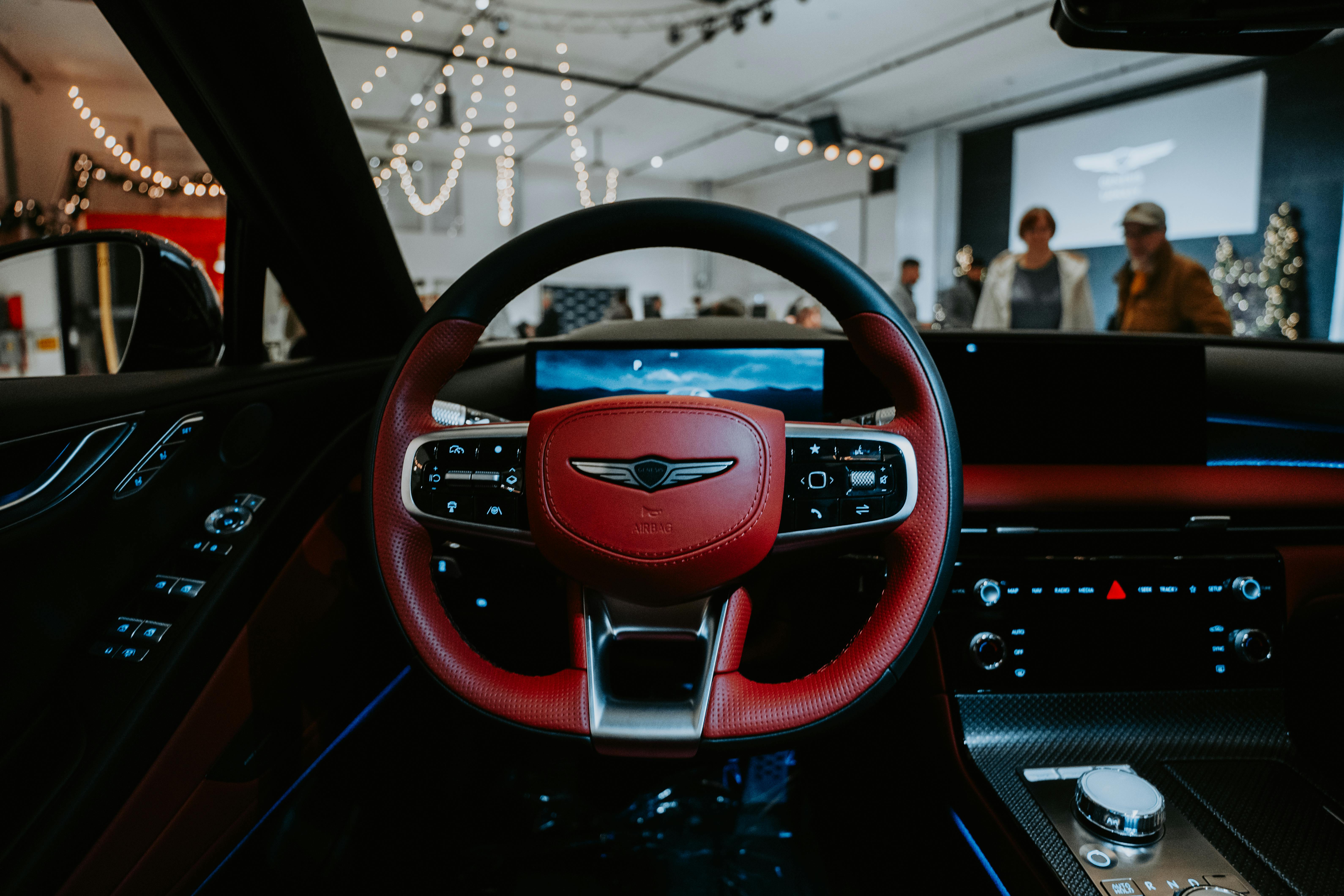
The 2026 electric crossover market is hotter than ever, packed with long-range EVs, cutting-edge tech, and competitive pricing. From the sleek Tesla Model Y to the spacious Kia EV9, this comprehensive review compares the top electric SUVs, helping you navigate financing, explore charging solutions, and find the best EV deal for your sustainable driving future. Discover which electric vehicle offers the ultimate blend of performance, practicality, and value.
Introduction to the Topic
Welcome to 2026, where the automotive landscape has been irrevocably transformed by the electric revolution. Specifically, the electric crossover segment has exploded, becoming the undisputed king of family transportation and adventure vehicles. Gone are the days of limited choices and range anxiety; today's EV crossovers offer compelling range, exhilarating performance, sophisticated technology, and a clear path to sustainable driving. For families, commuters, and adventurers alike, an electric SUV now represents the pinnacle of modern mobility.
But with an ever-growing array of innovative models vying for your garage, making the right choice can feel overwhelming. Manufacturers are pouring billions into advanced battery technologies, faster charging capabilities, and smarter driver assistance systems, creating a highly competitive market where every new release pushes the boundaries further. This article, brought to you by the experts at motorscrazy.com, is designed to cut through the noise. We'll dive deep into the most prominent and promising electric crossovers of 2026, helping you compare products, understand the critical features, and ultimately book services or make that crucial purchasing decision with confidence. Get ready to electrify your drive!
Backgrounds & Facts
The journey to 2026 has seen electric vehicle technology mature at an astonishing pace. What was once a niche market for early adopters is now mainstream, driven by a confluence of factors: significant government incentives, evolving consumer preferences, and dramatic improvements in EV capabilities. By 2026, range anxiety is largely a relic of the past for most new electric crossovers. Advanced battery chemistries, such as nickel-manganese-cobalt (NMC) and lithium iron phosphate (LFP) variants with improved energy density and thermal management, routinely deliver EPA-estimated ranges exceeding 300 miles on a single charge.
Charging infrastructure has also seen monumental growth. Public fast-charging networks, including Tesla's Supercharger network (now increasingly open to non-Tesla EVs), Electrify America, EVgo, and countless regional providers, have expanded exponentially, making cross-country travel a practical reality. Furthermore, 800-volt architectures, once exclusive to premium EVs, are now common across many segments, enabling ultra-rapid charging that can add hundreds of miles of range in under 20 minutes – often while you grab a coffee or run an errand. Home charging solutions, from Level 2 chargers to integrated solar setups, provide convenient overnight top-ups, ensuring you start every day with a full 'tank.'
Financially, the appeal of EV crossovers in 2026 is stronger than ever. Beyond federal tax credits and state rebates (which still vary), the total cost of ownership (TCO) is a major draw. Reduced 'fuel' costs, lower maintenance requirements (fewer moving parts, no oil changes), and often preferential parking or toll benefits contribute to significant long-term savings. This robust ecosystem of technology, infrastructure, and financial benefits makes 2026 the prime year to invest in an electric crossover, offering unparalleled convenience, performance, and environmental responsibility.
Expert Opinion / Analysis
According to leading automotive analysts, the 2026 EV crossover market is defined not just by raw specs, but by the seamless integration of hardware and software, user experience, and a holistic approach to sustainable mobility. "Range and charging speed are table stakes now," states Dr. Elena Petrova, Head of EV Market Research at AutoInsights Global. "The real differentiators are in the software ecosystem, predictive energy management, and the sophistication of advanced driver-assistance systems (ADAS) that genuinely enhance safety and comfort."
By 2026, ADAS suites are incredibly advanced, offering features like enhanced adaptive cruise control, lane-keeping assist, automatic emergency braking, and even Level 3 semi-autonomous driving capabilities on select highway stretches. Over-the-air (OTA) updates are standard, ensuring vehicles remain current with the latest features, bug fixes, and performance enhancements throughout their lifespan. This continuous improvement model means your EV can literally get better over time, a stark contrast to traditional internal combustion engine (ICE) vehicles.
Another crucial aspect is the driving dynamics. Electric powertrains deliver instant torque, resulting in thrilling acceleration and a low center of gravity due to the battery placement, which translates to superior handling and stability. "The driving experience of a modern EV crossover is simply superior for many," explains motorscrazy.com Senior Editor, Alex 'Spark' Sterling. "The quiet cabin, smooth acceleration, and often plush ride quality make for a remarkably refined journey, whether you're navigating city streets or cruising on the open highway. Furthermore, the emphasis on sustainable and recycled materials in interiors, coupled with vehicle-to-load (V2L) and vehicle-to-grid (V2G) capabilities, showcases a commitment to not just zero-emissions driving, but a broader energy ecosystem integration." Consumers are increasingly looking beyond just the car itself, considering the brand's commitment to charging infrastructure, service network, and overall environmental footprint.
💰 Best Options in Comparison (VERY IMPORTANT)
Navigating the crowded 2026 electric crossover market requires a close look at the top contenders. We’ve meticulously reviewed four leading models that represent the pinnacle of current EV engineering, offering a blend of performance, practicality, and cutting-edge technology designed to meet diverse needs and budgets. Each offers a unique proposition, making your choice highly personal.
Tesla Model Y (2026 Long Range / Performance)
The Tesla Model Y continues its reign as a benchmark in the EV crossover segment. In 2026, it refines its winning formula with subtle design tweaks, further software optimizations, and potentially even more efficient powertrain options. Its minimalist interior, dominated by the central touchscreen, provides a futuristic feel, while its unparalleled access to the Supercharger network remains a significant advantage for long-distance travel. Performance variants offer breathtaking acceleration, cementing its status as a sporty family hauler. Tesla's commitment to OTA updates ensures its technology stack is always evolving, keeping it competitive.
- Pros: Excellent efficiency, industry-leading charging network, advanced software features, strong resale value, exhilarating performance.
- Cons: Polarizing minimalist interior, reliance on touchscreen for most controls, premium pricing for top trims, potential build quality inconsistencies for some buyers.
- Target Buyer: Tech-savvy individuals and families prioritizing range, charging convenience, performance, and cutting-edge software integration.
Hyundai IONIQ 7 (2026)
Building on the success of its IONIQ siblings, the 2026 Hyundai IONIQ 7 enters the market as a formidable large electric SUV designed with family comfort and innovative technology at its core. Utilizing Hyundai's advanced E-GMP platform, it boasts an 800-volt architecture for ultra-fast charging and a spacious, highly adaptable interior that redefines cabin space. Its futuristic yet inviting design, coupled with Hyundai's reputation for strong warranties and value, positions it as a serious contender for those needing more room without sacrificing efficiency or features.
- Pros: Ultra-fast 800V charging, expansive and flexible interior space, distinctive design, strong warranty, competitive pricing for its segment.
- Cons: Brand perception might not match premium European rivals, potentially heavier than some competitors impacting agility.
- Target Buyer: Families needing ample space and practicality, valuing innovative design, fast charging, and a comprehensive warranty package.
Kia EV9 (2026)
The Kia EV9, a bold and boxy three-row electric SUV, is a game-changer for larger families seeking an all-electric solution. Its commanding presence and innovative interior packaging maximize passenger and cargo room, making it a true alternative to traditional gasoline-powered full-size SUVs. The EV9 leverages the same E-GMP platform as the IONIQ 7, offering similar ultra-fast charging capabilities and a host of smart features, including Vehicle-to-Load (V2L) functionality. Its rugged yet refined aesthetic appeals to those who want a practical and stylish electric vehicle.
- Pros: Genuine three-row seating, massive cargo capacity, unique and robust styling, V2L power export, fast charging, excellent warranty.
- Cons: Larger footprint can be challenging in urban environments, potentially higher starting price than some two-row rivals.
- Target Buyer: Large families, adventurers, or anyone requiring significant passenger and cargo volume in an all-electric package.
Ford Mustang Mach-E GT (2026)
For those who crave performance with their practicality, the 2026 Ford Mustang Mach-E GT continues to deliver. This electric crossover blends the iconic Mustang spirit with SUV versatility, offering aggressive styling, a driver-focused cockpit, and exhilarating acceleration. Ford has continuously refined its BlueOval Charge Network, making public charging more accessible, and its Co-Pilot360 ADAS suite is among the most comprehensive. The GT variant specifically targets enthusiasts who want a fun-to-drive EV that doesn't compromise on everyday usability.
- Pros: Sporty handling and acceleration, iconic Mustang styling cues, growing charging network support, intuitive infotainment, comfortable ride.
- Cons: Rear passenger space slightly tighter than some rivals, range can be impacted by enthusiastic driving, interior materials not as premium as some European competitors.
- Target Buyer: Performance enthusiasts, Mustang fans, and individuals seeking a sporty, engaging electric crossover for daily driving and weekend adventures.
To help you compare these fantastic options side-by-side, here’s a detailed table:
| Feature | Tesla Model Y (2026 LR) | Hyundai IONIQ 7 (2026) | Kia EV9 (2026) | Ford Mustang Mach-E GT (2026) |
|---|---|---|---|---|
| Starting Price (Est. 2026) | $54,000 | $58,000 | $62,000 | $64,000 |
| EPA Range (Est. 2026) | 335 miles | 310 miles | 300 miles | 290 miles |
| 0-60 mph (Est.) | 4.4 seconds | 5.0 seconds | 5.2 seconds | 3.8 seconds |
| Max DC Fast Charge Speed (Miles/10 min) | 170 miles | 200 miles | 190 miles | 100 miles |
| Cargo Space (Max. Cu. Ft.) | 76 cu. ft. | 80 cu. ft. | 82 cu. ft. | 64.4 cu. ft. |
| Key ADAS Features | Autopilot, Full Self-Driving (optional subscription) | Highway Driving Assist 2, Remote Smart Parking Assist | Highway Driving Assist 2, Smart Cruise Control with Stop & Go | BlueCruise (hands-free driving), Co-Pilot360 Assist 2.0 |
| Warranty (Basic/Battery) | 4 yrs/50k miles | 8 yrs/120k miles | 5 yrs/60k miles | 10 yrs/100k miles | 5 yrs/60k miles | 10 yrs/100k miles | 3 yrs/36k miles | 8 yrs/100k miles |
Outlook & Trends
The electric crossover landscape in 2026 is merely a stepping stone to an even more exciting future. Several key trends are poised to reshape the market further. Solid-state battery technology, while still in advanced development, is expected to see limited commercial deployment in niche or premium EVs within the next 3-5 years, promising even higher energy density, faster charging, and enhanced safety. This will unlock greater range and potentially smaller, lighter battery packs.
Furthermore, autonomous driving capabilities will continue their rapid progression. While fully autonomous Level 5 vehicles remain a distant goal, Level 3 and even Level 4 features (where the vehicle can handle all driving in specific conditions) will become more widespread and affordable. Subscription models for advanced software features, performance upgrades, and even temporary range boosts are likely to become standard, offering consumers flexibility and manufacturers recurring revenue streams. The integration of Vehicle-to-Grid (V2G) and Vehicle-to-Home (V2H) technologies will also become more prevalent, transforming EVs into mobile energy storage units that can power your home or feed energy back into the grid, further enhancing their utility and economic value. Finally, expect to see an increased focus on sustainable manufacturing practices, from recycled materials in interiors to carbon-neutral production facilities, as the industry strives for a truly circular economy.
Conclusion
The 2026 electric crossover market offers an unprecedented blend of innovation, practicality, and performance. Whether you prioritize segment-leading range, expansive family space, blistering acceleration, or a harmonious blend of all these, there's an EV crossover designed to meet your needs. The Tesla Model Y continues to impress with its efficiency and tech ecosystem, while the Hyundai IONIQ 7 and Kia EV9 redefine spaciousness and fast-charging capabilities for families. For those seeking a thrill, the Ford Mustang Mach-E GT delivers on its performance promise.
Ultimately, the "best" electric crossover is the one that aligns perfectly with your lifestyle, budget, and driving priorities. We strongly recommend leveraging this detailed comparison as your starting point. Explore our in-depth reviews on motorscrazy.com for each model, then take the crucial next step: book a test drive! Experience the exhilarating instant torque, the serene quietness, and the advanced technology firsthand. Don't forget to research current government incentives, financing options, and long-term charging solutions available in your area. The future of driving is here, and it's electrifyingly good. Make your move today and embrace the sustainable, high-performance world of electric crossovers!